
Creating Dynamic City Scenes from Text Prompts

A city is layers of activity happening simultaneously across multiple scales. Street-level interactions, traffic patterns, architectural detail, the quality of light between buildings, the rhythm of foot traffic — all of these create an environment that feels alive and purposeful. Capturing authentic city footage used to require location scouts finding exactly the right street at exactly the right time of day, with weather cooperating and crowds in the right density.
Text to video generation transforms city visualization, allowing detailed descriptions of urban moments to become authentic-looking footage without requiring actual location filming. Dreamina’s Seedance 2.5 model was built to understand the specific visual complexity of cities — layered activity, architectural coherence, human-scale interaction within vast environments — translating textual descriptions into footage that captures why cities feel the way they do.
Why city footage demands specificity about activity
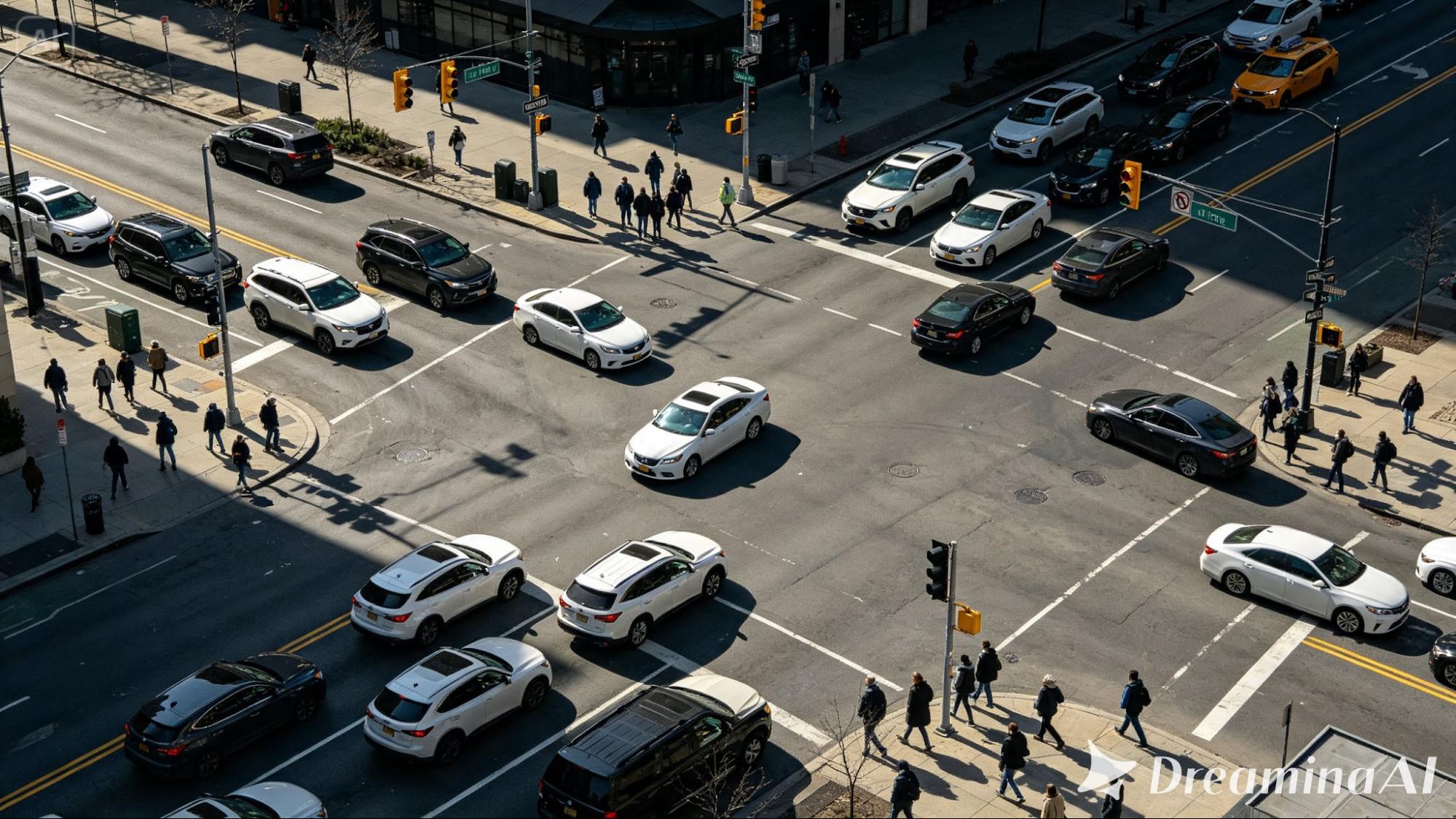
A city street photographed at different times of day reads as completely different places. A street at dawn, empty and quiet, communicates isolation and potential. The same street at rush hour, crowded and chaotic, communicates urgency and pressure. At evening, lit by building interiors and streetlights, it becomes intimate and social. The street itself is constant, but what makes it feel like a city — the activity, the energy, the sense of purpose — changes entirely based on what’s actually happening.
This matters because it shifts city visualization from just showing buildings to showing what makes cities work as human environments. A prompt that describes only architecture captures a lifeless stage. A prompt that describes activity, traffic flow, pedestrian patterns, and temporal context creates footage that feels like actual urban life.
Understanding city layers as compositional challenge
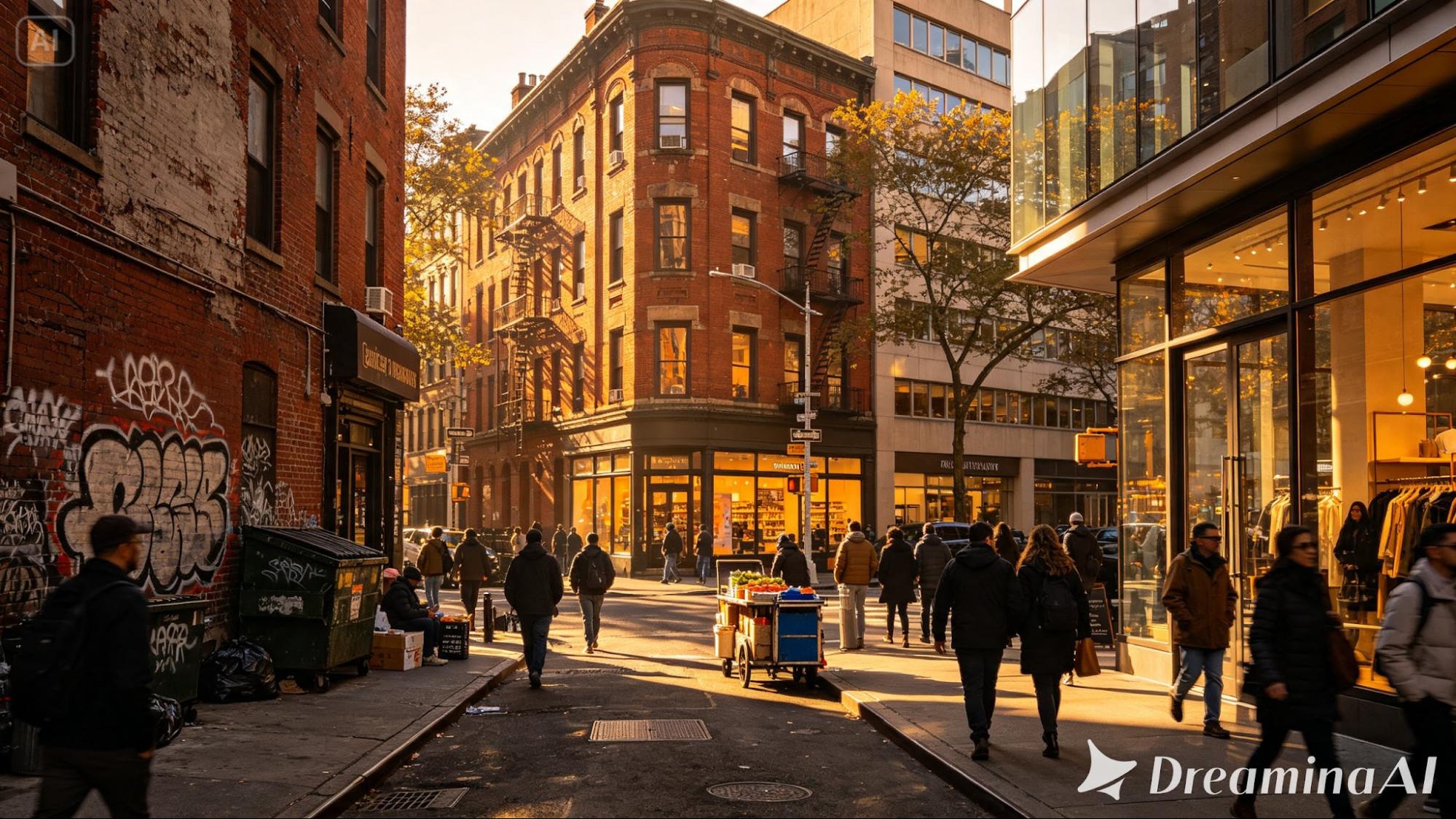
Cities exist in layers. Foreground activity, middle-ground traffic and pedestrians, background architecture and sky. Each layer contains information and movement. A street vendor at ground level, vehicles in the street, people using sidewalks, signage and advertising, architectural detail, sky and weather above — these layers stack on top of each other to create the texture of urban experience.
Effective city visualization captures these layers with intentionality. Foreground activity should feel immediate and present. Mid-ground should communicate flow and movement. Background should establish place and context. That compositional discipline is what separates footage that documents a city from footage that captures why a city feels the way it does.
From description to urban footage
Step 1: Describe the city moment with specific activity and context
Visit Dreamina, sign in, and head to the “AI Video” section. Identify what makes your chosen city moment distinctive — time of day, weather, activity density, architectural character. Click “Add reference image” if you have location photos or references. Write a concise prompt capturing the city scene with specific activity patterns.
A prompt might read: A transit station during evening peak hour, crowds flowing through with coordinated urgency, vendors setting up for commuter purchases, architectural transit design visible showing efficient crowd movement, energy and purpose evident in pedestrian patterns and pace.
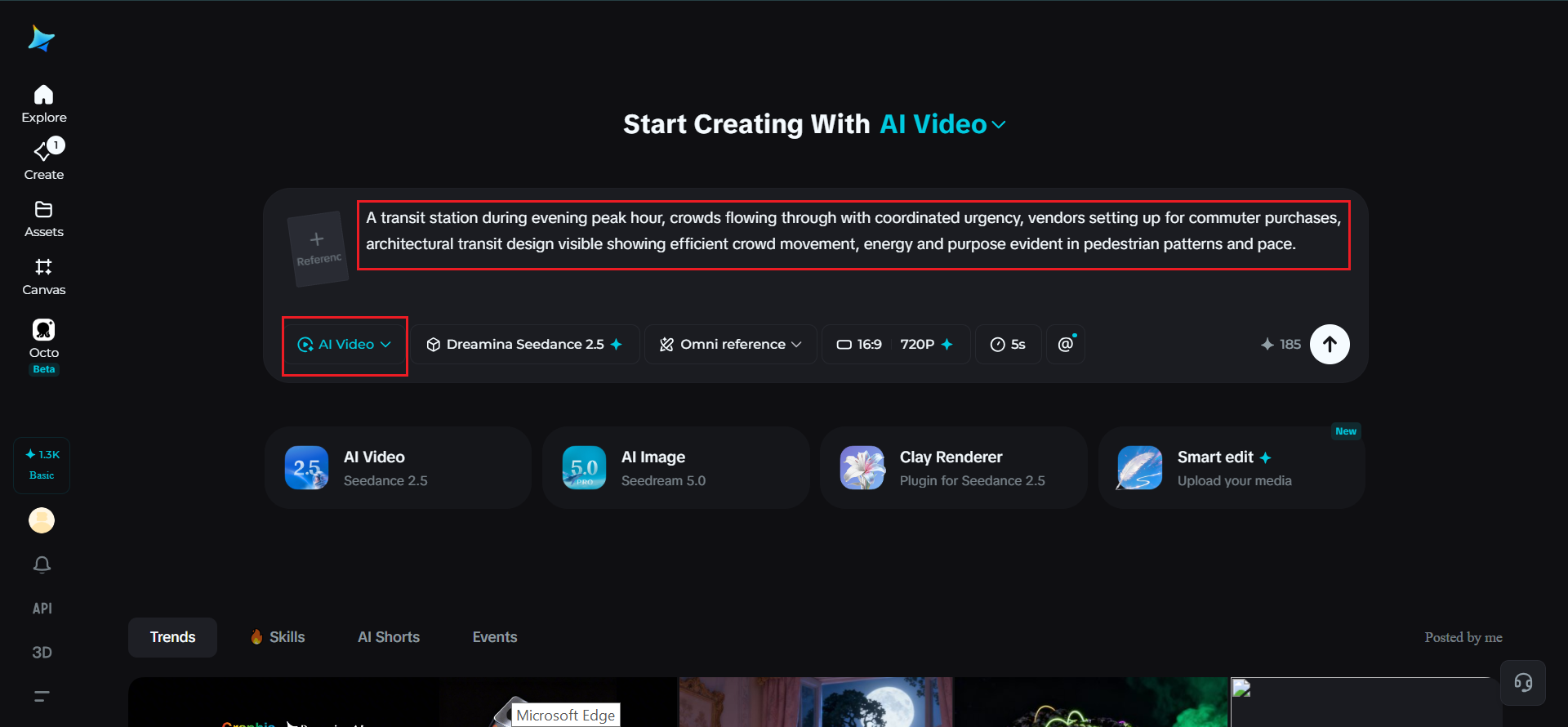
Step 2: Generate the city scene with Seedance 2.5
Select the Seedance 2.5 model. Choose 30-60 seconds for city footage that needs time to reveal urban patterns and activity. Pick 16:9 for urban planning contexts or documentation, 9:16 for social platforms. Click Dreamina’s generation icon and let it render your described city moment.
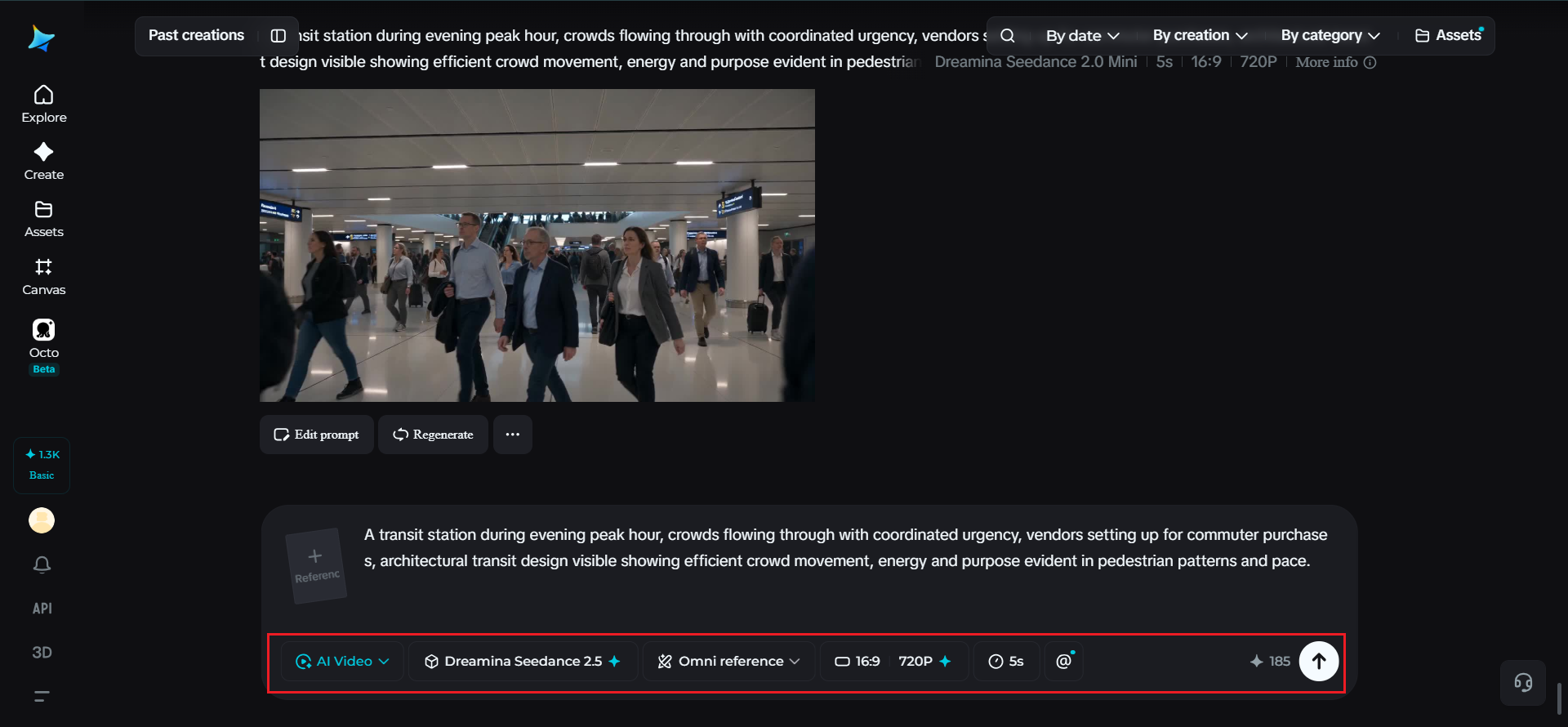
Step 3: Verify authenticity of urban patterns, then export
Use Dreamina’s AI editing tools to sharpen architectural and activity details. Upscale enhances street-level texture and building facade detail, while Generate Soundtrack adds urban ambient audio — traffic, voices, urban rhythm — that grounds the footage in actual city atmosphere. Confirm the city footage feels authentically urban before exporting and sharing.
What makes Seedance 2.5 built for authentic city visualization
Seedance 2.5 was designed to render urban complexity with the authenticity that makes generated city footage feel like actual places rather than generic urban backgrounds.
Architectural coherence across diverse building types
The model understands how different building styles coexist, how urban neighborhoods develop with layered architectural history, and how diverse structures create visual interest without feeling chaotic. Rather than generic cityscape, generated footage can show actual neighborhood character through building variety and architectural detail.
Weather integration that changes urban feeling
Weather doesn’t just affect how a city looks visually — it changes how a city functions. Rain creates reflections and changes traffic patterns. Sun creates dramatic shadow geometry. Fog obscures distance and creates atmospheric intimacy. Seedance 2.5 can render weather as an active element that changes urban behavior and mood.
Traffic and pedestrian patterns with authentic rhythm
Motion transfer consistency has improved to over 90%, which matters enormously for cities where pedestrian and vehicle movement reveals urban rhythm. Rather than random figures moving aimlessly, generated city footage can show coordinated patterns — people waiting at intersections, traffic flow responding to signals, crowd movement following actual urban logic.
Human-scale detail within vast environments
Cities simultaneously feel intimate at street level and vast from distance. A person on a city street is surrounded by immensity — tall buildings, distant traffic, crowds — but their immediate experience is human-scaled and particular. Seedance 2.5 can capture this duality, showing both the vast scale of urban environments and the immediate human experience within them.
Extended duration for complete urban moments
Single-clip generation extends to 30 seconds, with Ultra-long Video Generation mode reaching 180 seconds. City footage often benefits from duration— showing how traffic patterns change, how pedestrian flow evolves, how light shifts across buildings. Extended duration allows urban complexity to develop and reveal itself.
The emotional texture of different urban moments
A city at dawn communicates possibility and quiet. Morning rush communicates urgency and energy. Midday communicates commerce and activity. Evening communicates social gathering and possibility. Night communicates both isolation and intensity, depending on the area. Each moment has a distinct emotional texture, and that texture should be embedded in the prompt.
Writing prompts that capture urban authenticity
Effective city prompts describe activity and temporal context rather than just architectural elements. Instead of “a downtown street,” try “a downtown street during lunch hour, food vendors and outdoor seating creating social gathering points, professional workers moving between offices and restaurants, the street feeling economically vibrant and temporarily dense before afternoon dispersal, warm overhead sun creating sharp building shadows.”
When generated cities feel genuinely real
Authentic city visualization succeeds by capturing not just what cities look like but how they actually function — the layered activity, the temporal rhythms, the way human behavior and urban structure interact.
With Dreamina and its Seedance 2.5 model, detailed descriptions of urban moments become footage that captures authentic city life, allowing planners, developers, and storytellers to visualize urban concepts with the specificity and complexity that actual cities deserve.